The Pregnant Deer Story
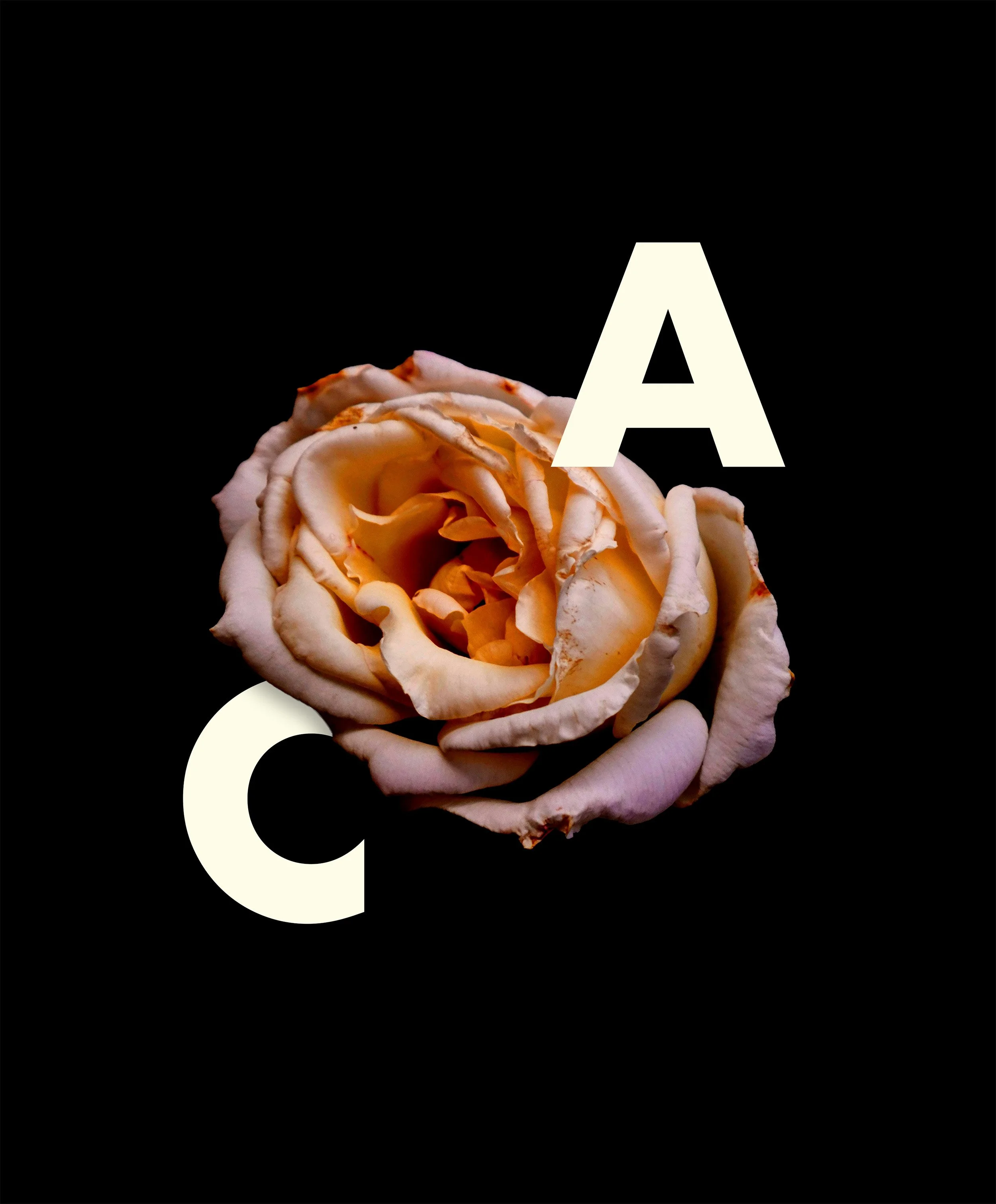
by Charlie Algazi
I’ve told this story a dozen times in the year since I left Westhill Farm, where I was a farmhand for Tom Thatcher, a man in the shape of a bent coat-hanger with a smile permanently folded into his face. His partner Ann was much the same, only she talked more, especially while we worked. Over a plow or pair of pruning shears, she told me some of the most interesting stories I have ever heard, in the least enticing way. She saw no point in poetry, every story pared down to utilitarian details: she went there, she did this, she saw that, she came home. Nothing went to waste at Westhill, not even words. I lived and worked with Tom and Ann for one month, three academic credits towards my undergraduate degree, and no pay.
The pregnant deer story starts like this: the night before my first day on the farm, Tom and Ann’s neighbor killed a doe with his car. She was hit from behind, ankles snapped on impact, skull dashed on the asphalt and most of the left hindquarter reduced to hamburger. Poor thing never saw it coming. Where some would see tragedy, however, Tom saw both a meal ticket and a teaching opportunity. On the crisp morning after the doe’s death, he showed me how to dress her carcass, whose meat we’d eat each day, at almost every meal, until I left Westhill.
“Watch where I cut, here,” said Tom, one hand braced against the doe’s sternum while the other held a buck knife under her ribs. He knelt beside her in the woods behind the farmhouse with one of her front legs slung over his shoulder in a parodic embrace. I stood beside him, watching, while Ann distracted the dogs. The doe might’ve been asleep if it weren’t for the purpled hindquarters, the ankles, and the head, which reminded me of medical drawings of faces with cut-away sections to show the different layers: hair, then skin, then muscle, then bone, then brain. The rest of her body was pristine: white and tawny fur wrapped over muscles that shifted like they were remembering how to run each time we moved her legs. The one remaining eye, black as a doll’s, stared past us toward the house. I’d never been so close to a corpse before.
The first cut looked too easy. Her swollen belly opened around Tom’s knife like a sigh, exhaling a spill of dark, syrupy blood. “Hold this, would you?” He handed me the doe’s elevated front leg. I grabbed it just below the ankle and held it high, the hoof dangling over my shoulder. He thanked me and reached his free hand inside the doe’s belly to grab hold of her organs, narrating all the while:
“This, here, is the esophagus—you’ll want to cut that.”
“Make sure not to nick the intestines, there.”
“You can cook these ones, if you like, but I don’t usually bother.”
One after another, organs lined up along the blue vinyl tarp laid out beside the doe, each labeled by Tom’s calm dictation: the liver, the kidneys, the heart. Too many pieces to fit inside one body, I thought. Any offal too mangled to be of use was diced with a flash of Tom’s knife and tossed to the dogs, who trotted circles around us, held back only by Ann’s firm hand.
After unspooling a length of intestine, Tom paused, elbow-deep. “Hold on,” he said, “There’s something…” He tugged—a silvery-white sac slipped out onto the leaflitter. The dogs showed immediate interest, pacing and yipping excitedly. Tom prodded the sac with his knife until it split and peeled away like a burst balloon. I’ve told this part of the story so many times that in my memory, I already knew what was inside. I knew it all along, and so did Tom, and Ann, and the dogs. So do you. There on the ground, two tiny bodies curled back-to-white-spotted-back, soft-hoofed and pink-bellied and utterly flawless. Twins.
The story ends here, usually. Now is when I show my audience the picture I took on my phone of the fawns and savor how their stumped silence mirrors my own, because what else is there to say? I went to Westhill, I helped dress a roadkilled deer, I saw her two perfect, dead children, I came home. How else can I tell it? I could say that the blood from the doe’s belly smelled like eating a handful of pennies and that my rain boots never stopped stinking. I could describe how fistfuls of hollow fur fell away under my hands when I held the doe’s leg. How the fur stuck to everything: my clothes, Tom’s hands, the fawns, the organs on the tarp, the blood-slick leaflitter. I could tell you that Ann and I carried the fawns deeper into the woods but didn’t bother to bury them because the dogs would only dig them up again.
What more can I say? The doe died the night before we cut her open, days before her babies might have been born. I stripped off my jacket and held a slippery, bow-legged fawn in my arms and took it to the woods and covered it in dry leaves to keep its body warm. What can I tell you? What combination of facts or poetic turn of phrase might make you understand?
When I’ve shown people the picture I took of the twin fawns, they’ve called it beautiful and disgusting and sad. If words or poetry could teach you how to see what I saw, or feel what I felt, these are the words: beautiful, disgusting, sad. Yet even these won’t do; not even the picture I took will do. The moment is the poem, I am the reader, and I can never tell you the full truth of what I know. Even as I try to draw you in to that moment—Tom, Ann, and I huddled around that almost-mother as Tom’s sure hands deliver her almost-children—my words are the dogs, barking and circling around us, chasing down our few and bloody scraps.
Charlie Algazi is a story-teller, -collector, and -enthusiast. His recent work focuses on intersections between queer/trans narratives, grief, and human ecology. His stories seek to examine the limits of language and stretch them if possible. He is currently based in the UK. Find more at charliealgazi.wordpress.com.